Be yourself; Everyone else is already taken.
— Oscar Wilde.
This is the first post on my new blog. I’m just getting this new blog going, so stay tuned for more. Subscribe below to get notified when I post new updates.
Be yourself; Everyone else is already taken.
— Oscar Wilde.
This is the first post on my new blog. I’m just getting this new blog going, so stay tuned for more. Subscribe below to get notified when I post new updates.
Streetwear is generally defined as a style of fashion that consists of casual clothing, such as t-shirts, jeans, and caps, that gained global popularity in the 1990s. Much of streetwear is heavily influenced from California’s surfing and skating culture as well as the hip hop scene in New York, and some very popular streetwear brands today include Supreme, Off-White, Bape, Stussy, Fila, and Adidas. Although streetwear can be represented by certain brands, it can also be represented by different styles, cuts, and designs. Many of the popular fashion trends today can either be considered as streetwear or at least heavily inspired by elements of streetwear. Streetwear is mostly known for its casual, laidback, and relaxed feel, and it is also characterized by certain kinds of graphics and designs, such as brand logos, clean typography, bright logos, and nostalgic themes.
Streetwear has gained a cult following the past decade, with brands such as Diamond and Obey popularizing the skater aesthetic in the early 2010s. During the mid-2010s, famous rapper Kanye West began his own brand of shoe, Yeezy, which quickly became one of the most envied items to a wide demographic people, ranging from middle school students to celebrities. This time period marked the beginning of hypebeast culture, which is the idea of buying brand-name clothes and accessories to impress others. Currently, many “hypebeasts” are avid consumers of brands like Bape and Off-White, which have a huge worldwide market. Many people purchase “bots” online to increase the chances of buying new items from these brands, since they can sell out in a matter of seconds.
Even though streetwear has made this generation more appreciative of fashion, it has yielded several issues and problems. One particular issue is the plagiarism of design among streetwear designers. For example, designer Ian Connor has been accused of “ripping off” Vans Old Skool sneaker design for his “Revenge” Sneakers. Not only are independent fashion designers guilty of stealing designs, but corporate clothing stores have overtly plagiarized certain designs and graphics off designer brands. Many popular fast fashion stores, such as Zara, Forever 21, and H&M, have replicated the designs of brands like Yeezy and Gucci on lower-quality products and sold them at low prices. Fast fashion stores are defined as retail stores that mass produce trendy and stylish clothes using mostly synthetics. Consequently, these clothes are not meant to last a long time. Another fault of the fast fashion industry is that a majority of these synthetics ends up in landfills and does not decay. Although fast fashion retailers allow the average consumer to purchase stylish pieces at affordable prices, it comes with an environmental cost. Additionally, many fast fashion pieces end up getting burned, which emits massive amounts of carbon dioxide into the atmosphere.
As a result of people becoming more environmentally conscious and fiscally responsible, thrifting has become increasingly popular in the past few years. Many people go to thrift stores early in the morning to find rare and valuable clothing items, like a vintage Nirvana concert T-shirt or basketball sneakers, for a fraction of their retail price. Surprisingly, many people have gained a massive social media following for selling second-hand and vintage streetwear pieces, such as Sean Wotherspoon and Paul Cantu. Many bloggers and content creators have started conversations about the issues of fast fashion, like Sam Fazz and Arden Rose. In the realm of general streetwear, people on YouTube, like Richie Le and Harrison Nevel, have become popular by filming themselves showing their favorite items of the season and giving tips on how to improve one’s style.
With the ever changing status of fashion trends today, I have several things that I want to research and learn more about. Although thrifting is an amazing to buy stylish clothes for a low price, I would like to know if there are other environmentally friendly, affordable, and more efficient ways to shop for clothes outside of thrift shops. Often, thrifting consists of going through several racks for an hour or two to leave with only a few items, and some of the garments on the racks can be soiled. Also, I would want to know more about whether or not streetwear has perpetuated materialism and greed in today’s culture, with people today spending thousands of dollars on brand-name clothing. This has also contributed to “designers” emphasizing on quantity over quality, giving streetwear a superficial reputation. Furthermore, I would want to learn more about the female voice and representation in the streetwear industry, since it is primarily male-dominated.
Growing up, I have found fashion as an outlet to express who I am as well as a means to gain self-confidence. I am interested in streetwear because of the community it brings as well as how it has inspired designers to pursue fashion and create clothes that represent modern times and the youth of today. Today, fashion has become a means to help improve one’s appearance as people have become more self-conscious in society. There are also many online forums helping people find their style as well as giving updates on the latest streetwear news on sites such as Reddit and Complex. Within the scope of streetwear, I want to mainly focus on its environmental and ethical issues and the growing popularity of second-hand and independent retail for my research. Streetwear is something that people should appreciate and know about since it has greatly contributed to the fashion trends of today. Many of the popular cuts, designs, and pieces people wear, such as skinny jeans, oversized hoodies, acid-wash T-shirts, and even joggers would not be popular without streetwear. Since streetwear has greatly contributed to the closets of many people, learning about issues and current changes in the streetwear industry are relevant.

My first process of writing is to outline, sketch, or brainstorm for ideas I want to talk about in my next blog post. I typically come up with some of these ideas in class, sometimes while the professor is giving the instructions in class. I like to write out the ideas and layout of my post so that I will not forget the sequence in which I want my ideas flow in my post as I write.

When I come home after the gym, I like to start on my writing assignments as soon as possible. I prefer to write on my desk in my room and to have plenty of natural light. Finishing my assignments with this view during this time of day makes writing feel less tedious and boring.
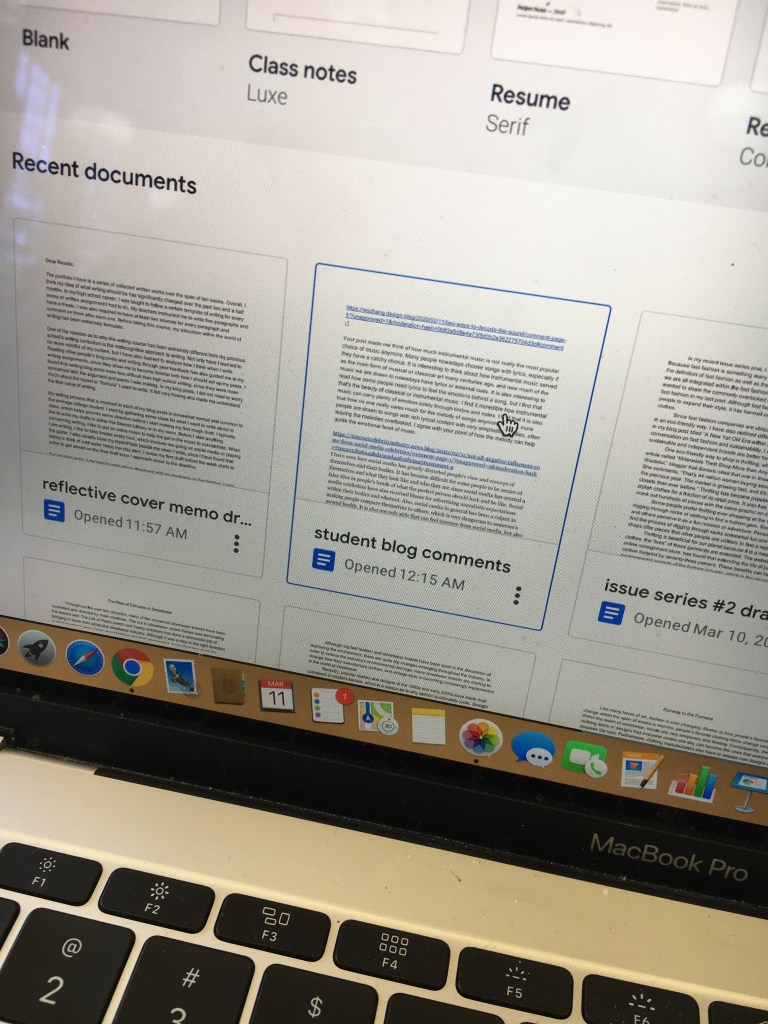
I like to use Google Docs to write the drafts of my blog posts because it auto-saves, and I can retrieve them anywhere when I do not have my laptop with me. Eventually, I copy and paste or import my document onto EliReview in order for it to get peer feedback.

I really despise doing work in silence, so I always have music playing when I complete my assignments. This is my favorite playlist to listen to while I write. It is mostly just chill, instrumental music, so it makes me calm yet focused on the task I have at hand.
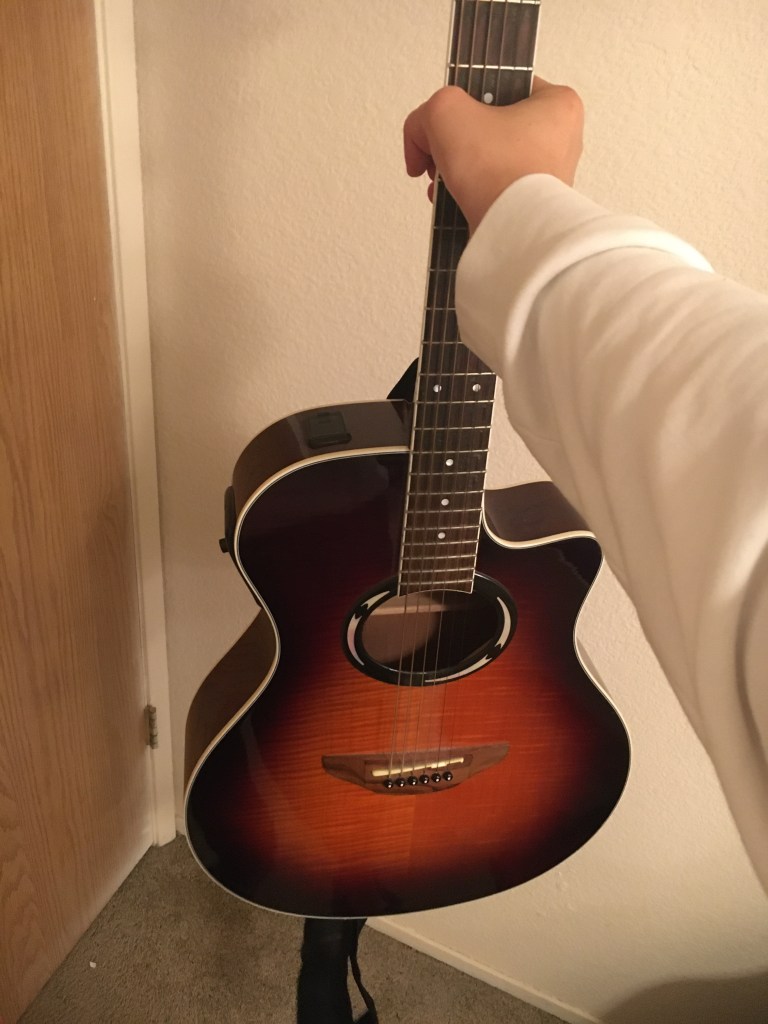
After every hour of doing work, I like to reward myself by taking a break. My breaks usually last 15-30 minutes, and I like to either browse social media, watch YouTube videos, or play some guitar.

When I have been writing for a long time, I like to have some fun snacks or beverages beside me as I complete my work. In this photo, I made a cup of tea. I also like to have my notepad with my ideas next to me to help me cover all the ideas I want to talk about in the post.
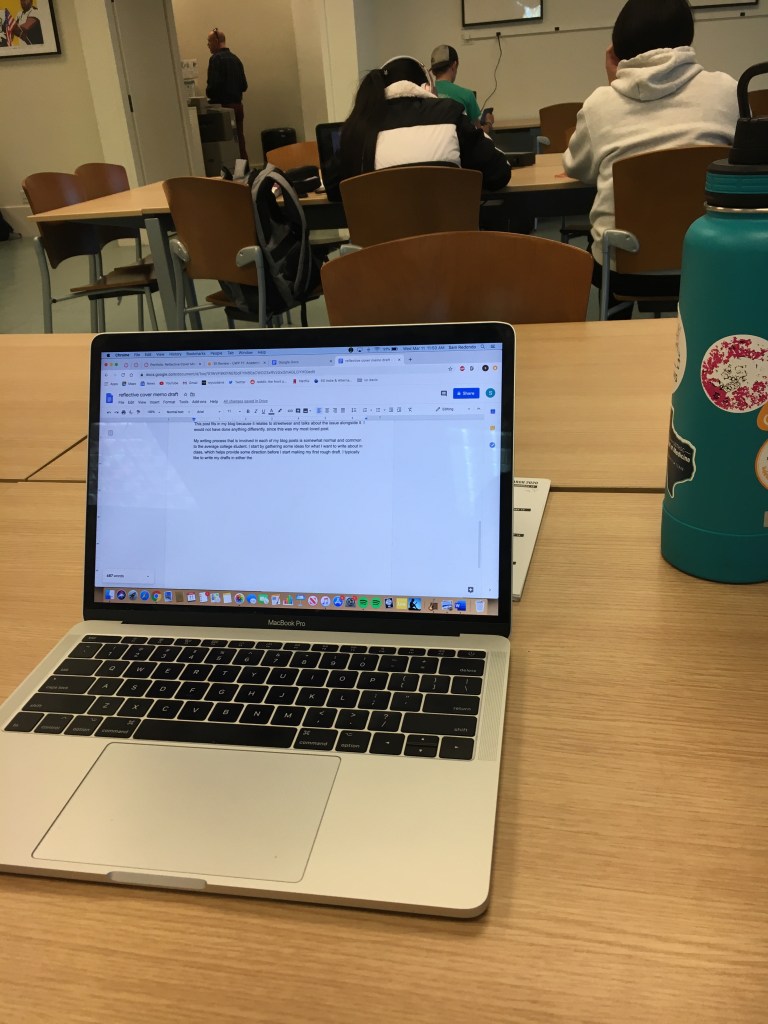
I like switching up my study spots since it makes the writing process more interesting. My other favorite place to write besides my room is the Shields Library. In this photo, I am on the first floor. I either do my work in the first or second floor, and I have water next to me to keep me hydrated.

Boba is one of my favorite drinks, and it’s nice to go out and get some once in a while to have something to sip on while writing. I also use my AirPods to listen to music when I write outside of my home.

I typically finish my first rough draft towards the end of the week, and then I save revising for the weekend. I usually revise my writing at home. I like to revise my writing during the weekend so that I can start the week focusing on tweaking and perfecting my final draft.

I also always bring my planner with me whenever I write. In my planner, I have the list of tasks I want to complete for the day. Checking a task off when I am done with a blog post makes me feel relieved and accomplished.
I have found that this writing process has worked very well for me; therefore, I would say that I am satisfied with it. This photo essay is very representative of my writing process. However, there are a few times where I have to work on my blog posts at the Memorial Union or the ARC due to time constraints. I am satisfied with how I cultivate a good writing environment at home or the library. After evaluating my writing process, I can honestly say that I would not a change a thing about it because of its effectiveness.
In my recent issue series post, I discussed the topics and issues of fast fashion. Because fast fashion is something many people are unfamiliar with, I have previously outlined the definition of fast fashion as well as the advantages and disadvantages of fast fashion. Since we are all integrated within the fast fashion industry somehow, most likely as consumers, I wanted to share the commonly overlooked results of our decisions when it comes to shopping fast fashion in my last post. Although fast fashion does provide a quick and affordable way for people to expand their style, it has harmed our environment through its disposal of unsold clothes.
Since fast fashion companies are ubiquitous, it can be difficult to find ways to buy clothes in an eco-friendly way. I have also outlined different ways to buy clothes outside of fast fashion in my blog post titled “A New Yet Old Era within Streetwear.” In order to expand the conversation on fast fashion and sustainability, I will share how thrifting and consuming from sustainable and independent brands are better for the environment than shopping fast fashion.
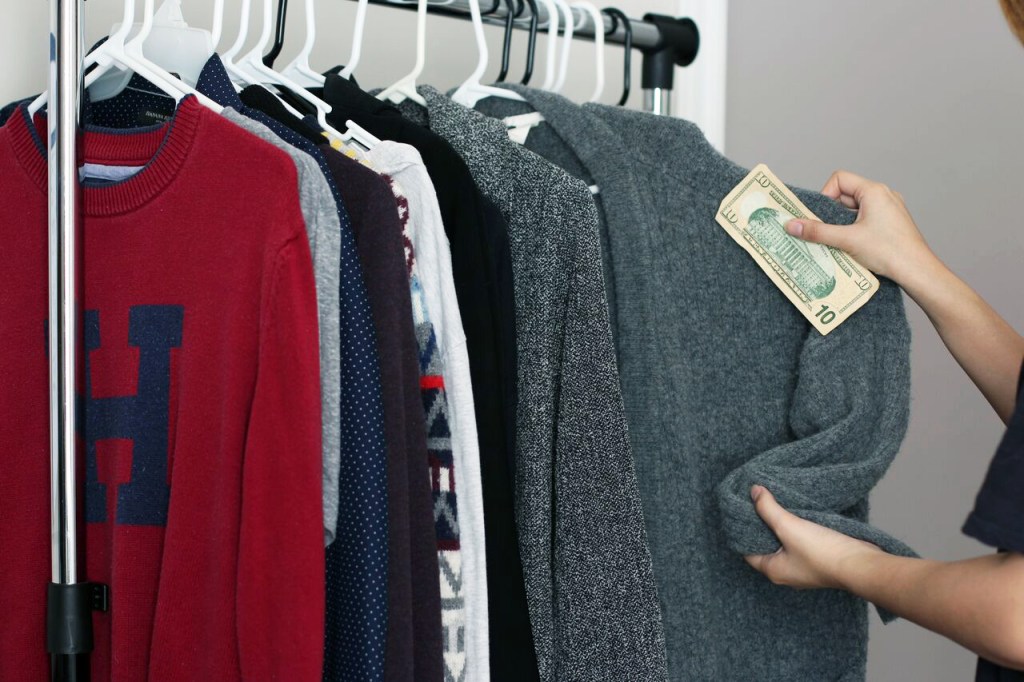
One eco-friendly way to shop is thrifting, which is becoming extremely popular. In an article called “Millennials Thrift Shop More than Any Generation – But They Are Also the Most Wasteful,” blogger Kali Borovic cited that one in three women shopped secondhand as of 2017. She comments, “That’s 44 million women buying secondhand in 2017 as compared to 35 million the previous year. The market is growing fast, and it’s leaving more room in people’s wallets and closets than ever before.” Thrifting has become popular because it allows the customer to buy stylish clothes for a fraction of its retail price. It also has great variety, since thrift shops do not crank out hundreds of pieces with the same graphic on it.
Some people prefer thrifting over shopping at the mall because of the fun they find in digging through racks of clothing to find a hidden gem. Some may perceive it as a waste of time, and others perceive it as a fun mission or adventure. Personally, I love the concept of thrifting. I find the process of digging through racks somewhat fun and exciting, and I enjoy how thrift shops offer pieces that other people are unlikely to find a replica of.
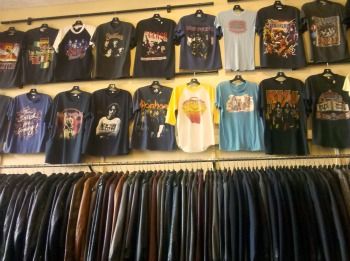
Thrifting is beneficial for our planet because it is a means to recycle clothes. By reselling clothes, the “lives” of these garments are extended. The website ThredUp, which is a large online consignment store, has found that extending the life of just one garment can reduce its carbon footprint by seventy-three percent. These benefits can help offset the negative environmental impacts of the fashion industry, which is the second most polluting industry.
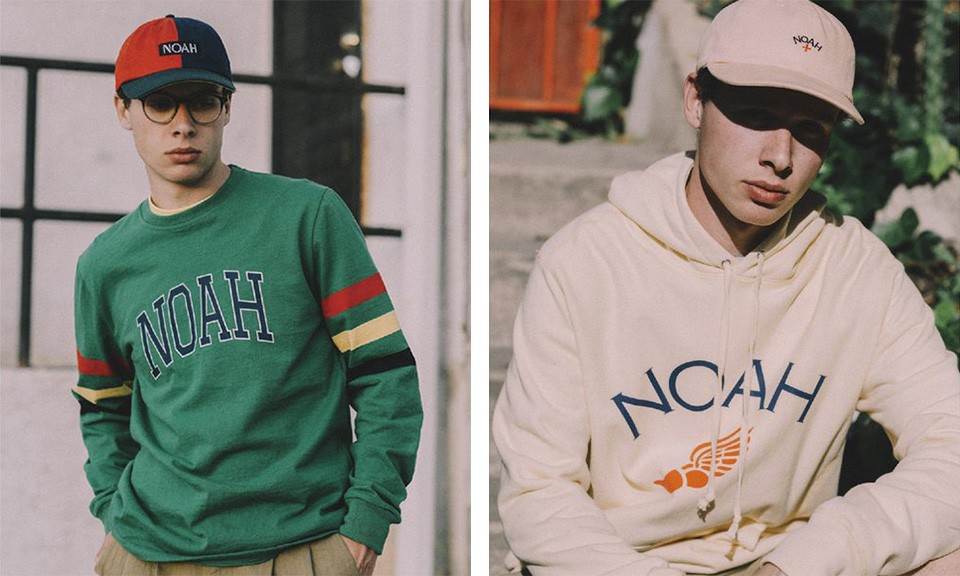
Besides thrifting, one way that you can shop sustainably is to buy and consume from eco-friendly and independent clothing brands. Although these garments will most likely be somewhat more expensive than the clothes from the mall, spending a couple more dollars on a brand that cares for the environment is worthwhile. For example, instead of depending on synthetics, the streetwear brand Noah, which is owned by a former creative director of Supreme, has been adopting sustainable and eco-friendly practices to create its garments. These practices help reduce the amount of fabrics and synthetics being thrown into landfills. Many of their pieces have facts about the damage humans have done to the environment on the back of the care label to spread awareness about the state of our climate.
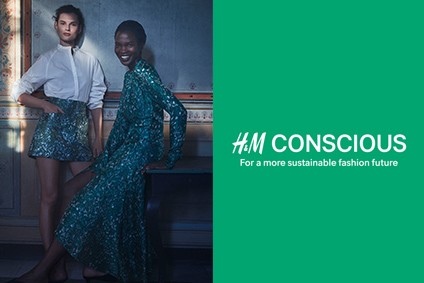
With the widespread concern for environmental issues present in today’s society, there are changes being made in the mainstream fashion industry. One example is the widely known and recognized fast fashion chain: H&M. The website goodonyou.eco, which rates and analyzes the ethics and quality of clothing brands, states “H&M has pledged to become 100% ‘climate positive’ by 2040 by using renewable energy and increasing energy efficiency in all its operations.” Although H&M has a clothing line called “Conscious,” which is known for having garments that were manufactured with sustainable materials, it “still operates under an unsustainable, fast-fashion model,” according to the same website. Even though H&M is not entirely sustainable and environmentally friendly, I think that having climate positivity and sustainability involved in their company is commendable. Because these fast fashion companies are essentially businesses that aim to generate profit, it can be easy to neglect sustainability in order to get a quick buck. Therefore, I think it is respectable for H&M to aim to progress environmentally.
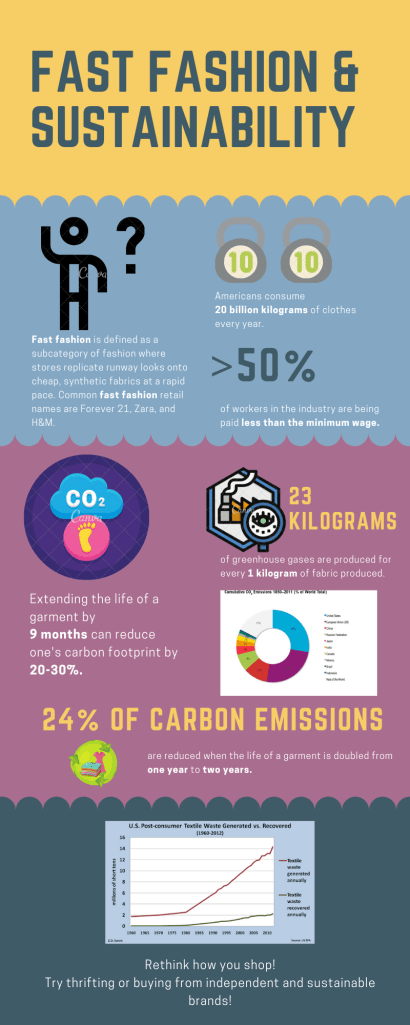
With environmental harm being a significant drawback in the fashion and streetwear industry, it is important that we learn about how to make eco-friendly decisions. In my infographic, I shared how twenty-three kilograms of greenhouse gases are required to make one kilogram of fabric. I also shared how extending the life of a garment can tremendously reduce one’s carbon footprint. These facts are the reasons as to why we should shop for more secondhand and sustainable clothes. The environmental impacts of making and buying brand new clothes should encourage you to reuse and recycle clothing as much as possible. I am not telling you to completely boycott fast fashion companies, and I am not telling you to only shop at Goodwill from this point forward. However, I am encouraging you to at least try. Instead of going to Forever 21 to buy a hoodie, try checking out your local thrift shop to buy one. At the end of day, what is important is that we try to make good choices when consuming clothing goods.
Many large retail names in malls across the world have become popular amongst shoppers because of their inexpensive yet trendy inventory. Another reason as to why certain stores in your local mall have attracted many customers daily is the number of brand new pieces and designs being released every few weeks. Since a large portion of these designs are inspired by current trends or popular looks from Fashion Week, these stores aim to dress their customers in fashionable yet affordable clothing pieces. These types of stores fall under the genre called “fast fashion,” and it is very likely that you have purchased from these kinds of clothing stores.

Fast fashion is an issue that people should be aware of because nearly everyone is involved in the fashion industry in some way. Many people buy their outfits from fast fashion brands because they are affordable and accessible, but they often are unaware of the downsides that accompany their choices. People should care about the dangers of fast fashion because it is an extremely popular means to buy clothes yet has a detrimental effect on the one planet that we can currently live on. In order to develop my argument about the harms of fast fashion and the importance of sustainability, I want to define fast fashion and discuss its economic benefits and environmental drawbacks.
Fast fashion can be defined as inexpensive, rapidly manufactured clothes that reflect the current styles. Many of these garments are not meant to last for a long time, since they are mostly made with synthetics. Therefore, fast fashion is mostly geared towards people that solely want to replicate the look of something they saw on a fashion blog or Fashion Week for an inexpensive price. Additionally, fast fashion brands release several new designs and garments every few weeks, thus making it “fast,” in order to meet the increasing demand of certain pieces by their customers. Because fashion trends are extremely temporary, these brands have to capitalize on the time sensitivity of these trends. Some widely recognized fast fashion retail names include Topshop, Forever 21, H&M, Uniqlo, and Zara.
One of the widely known advantages to fast fashion is its ability to stimulate economic growth within the textile industry. In a paper called “Can fast fashion save the U.S. apparel industry?”, Peter Doeringer, who works in the economics department of Boston University, and Sarah Crean, who is involved in the Garment Industry Development Corporation, inquire about the possible economic benefits that fast fashion can provide for the United States of America. They write, “The only long run solution is to generate market growth for the types of apparel products for which New York City has a comparative advantage — products where production runs are short, supply schedules are urgent, and design and quality are important.” This suggests how the emphasis of speed and design, which is characteristic of fast fashion, can help stimulate market growth.
Also, in an article called, “The Economic Impact of Consumer Purchases in Fast Fashion Stores,” Ľubica Knošková and Petra Garasová, who work in the University of Economics in Bratislava, write, “We can say that the growth of fast fashion retailers exceeds the expected growth of the apparel industry and thus grows faster than the whole industry which is expected to reach 5.91%.” The popularity of fast fashion allows for significant economic progress within the apparel industry. Fast fashion has created a giant market from encouraging customers to return to the stores and buy more pieces. By keeping up the quick changes within fashion trends, fast fashion is able to create a large profit by creating and selling affordable clothes at a rapid pace.
Now, fast fashion may sound like the best of both worlds to you, right? New and trendy clothes for a low price? How can you go wrong? As it turns out, fast fashion comes with a cost. As of recently, fast fashion has been accused of having environmentally harmful practices. For example, according to an article on Vox, a liberal-leaning American news outlet, “H&M had burned 60 tons of new and unsold clothes since 2013.” When clothes are burned, many chemicals (through dyeing) and mass amounts of CO2 get emitted into the atmosphere. This obviously harms the environment and worsens the climate and environmental crisis we are in today.

Now, you might be asking yourself, “Why don’t they just donate these clothes?” According to the same Vox article, “Historically, a lot of the donations have gone to Africa, Latin America, South America, and to some countries in Asia. But in the last couple of years, a number of African countries, like Kenya and Uganda, have actually banned the importation of secondhand clothing from the West.” These laws and restrictions have made it difficult for clothes to be further reused and recycled rather than being placed into incinerators or landfill, which already has fifteen million tons of textiles.
Although fast fashion provides accessible trendy pieces for affordable prices, it comes with a higher price to pay – the price of a better environment. Fast fashion has done wonders to help our economy, but it has done great damage to our environment. The fast fashion industry has grown and developed to have a huge reign in our local malls that it can be difficult to avoid or suddenly quit consuming from these types of clothing corporations.
So, what can we do about reforming the industry? How can we shop for clothes in an eco-friendly way? Are these fast fashion giants starting to make any sort of change to help the environment? In my next issue series post, I will discuss some practical ways people can shop without harming the environment and the shifts within the streetwear culture combating the effects of fast fashion.
Throughout the past two decades, many of the renowned streetwear brands have been controlled and directed by male creatives. The era in streetwear where Kanye was dominating the market with The Life of Pablo merch and Yeezy sneakers has done a successful job of bringing in more men within the streetwear industry. Although it was a step in the right direction in destigmatizing men caring about fashion and their appearance, it provided less room for female streetwear brands to shine through. During this shift in streetwear culture, seeing a woman become famous through streetwear was a rarity. This gender discrepancy has made me curious about the state of female streetwear today, and why there are not as many huge female streetwear brands as there are male.
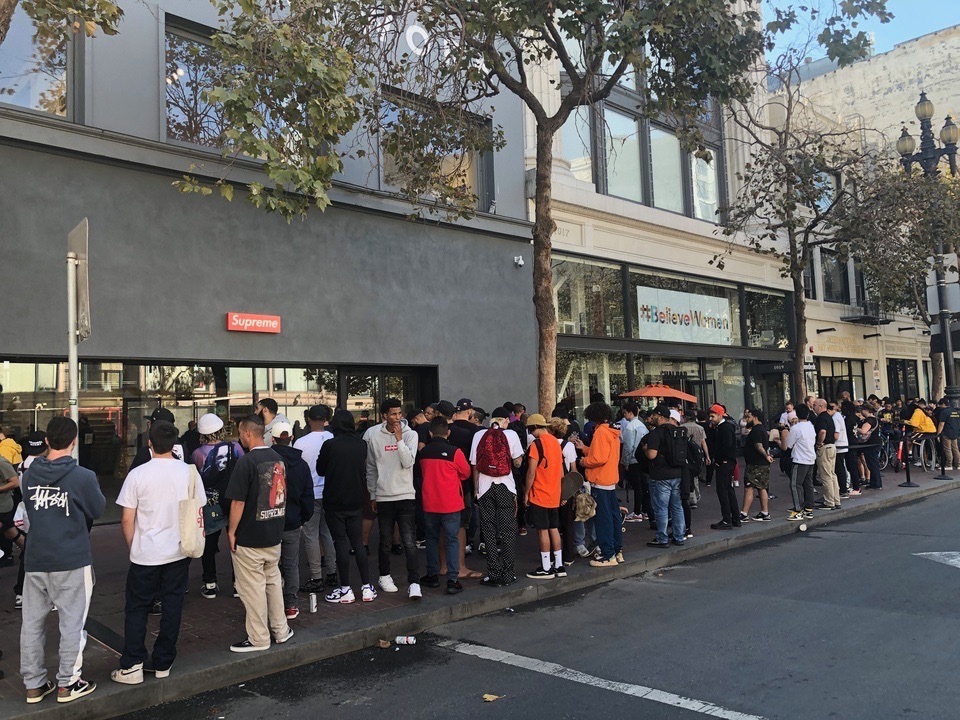
As a streetwear enthusiast, seeing fashion transition from being women-dominated to being men-dominated was intriguing for me to observe. I remember still being at home in Southern California and seeing how the line outside the Supreme store in West Hollywood looked as if it was ninety percent male. On Instagram, the streetwear category became overly saturated with men wearing Yeezys, black skinny jeans, and Bape T-shirts. There are also many male YouTubers uploading videos talking about how they spent hundreds of thousands of dollars on expensive streetwear pieces. So, why aren’t women being more represented or involved in the streetwear industry?
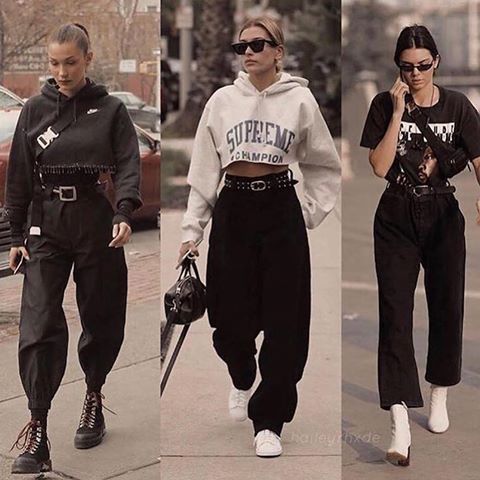
In a Vogue Business article called “Is Streetwear Finally Ready for Women?” writer Annachiara Bondi writes, “Streetwear for women has been difficult to market, with many women buying from menswear and/or menswear retail spaces.” I agree that this trend has hindered female streetwear from reaching the same status as male streetwear brands. Since men’s streetwear is composed of generally gender neutral articles of clothing, women are able to shop directly off male streetwear brands if they wanted to. Due to how esteemed designer brands have become in today’s culture, some women would rather wear a piece from a famous, male-controlled streetwear brand like Supreme or Stussy, than an underground, female-controlled brand. In this instance, I do not think women buy male streetwear pieces because they inherently believe female streetwear is inferior but rather due to brand recognition, comfort, and accessibility. I believe that the mass amounts of gender neutral or conventionally masculine pieces in streetwear inspired potential female streetwear brands to bring something different to the table.
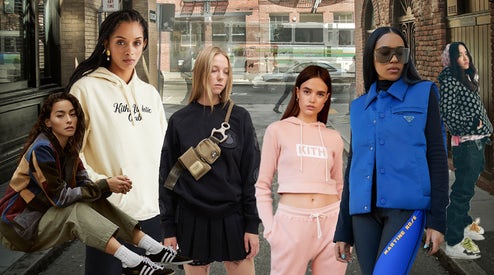
Although women buying from male streetwear brands has given the female streetwear market some difficulties, the growth of female streetwear brands is not entirely stunted. In the same Vogue Business article, Bondi cites, “The amount of new women’s streetwear drops has increased by 38 per cent over the last 12 months.” Very recently, I have seen some significant expansion of the female voice in streetwear. The brand I.AM.GIA has done a successful job building a business of selling very feminine pieces inspired by 90s punk culture, and the brand Pretty Little Thing sells items ranging from hoodies to bodycon dresses catered for women. I think that this increase of sales within women’s streetwear is beneficial for the industry, making it a more inclusive community. It also adds variety within streetwear since it includes feminine pieces, such as dresses and rompers, as opposed to having only T-shirts and hoodies. These unique feats of these brands have allowed them to grow as well as instill change and progress in the world of streetwear.
Furthermore, in an article from Business of Fashion called “Why Women’s Streetwear Will Be Big Business,” writer Reggie Casagrande warns, “If [brands] don’t commit to growing and serving their female audiences, they will be left behind.” I agree that the streetwear market definitely has room for more women to corner, and I believe that big male-oriented streetwear brands like the Hundreds and Palace should try to cater more towards women interested in streetwear. However, I disagree with the notion that catering to female audiences will ensure the brand’s success. For example, Macy’s and Forever 21, which had a majority of women’s clothing, are now being driven out of business. Yes, I do agree that brands must represent women in order to be successful, but it should not be the only thing that they depend on in order to generate profit. Other aspects, such as good quality textiles and creative graphics and designs, are important in sustaining a brand.
Although some big fast fashion and streetwear brands have been quiet in the discussion of improving the environment, there are quite big changes emerging throughout the industry. In order to reduce the industry’s environmental damage, many streetwear brands are starting to change how they manufacture clothes, and vintage style is becoming increasingly implemented into the world of streetwear.
Recently, popular clothes and designs of the 1990s and early 2000s have made their comeback in modern fashion, which is evidence that fashion is ultimately cyclic. Today, many young kids and adults are wearing straight cut Levi’s, crop tops, tiny sunglasses, and distressed Nirvana T-shirts. See for yourself by going outside and taking note of how many clothing items are being worn today that remind you of the 90s. Not only does buying second-hand clothes make one’s wardrobe unique and stylish, but it also reduces one’s carbon footprint. It allows for clothing items to be reused and repurposed instead of thrown into the landfill or become incinerated. In an interview last year with Dazed magazine, Virgil Abloh, a streetwear giant and creative director of Louis Vuitton, said, “I would definitely say [streetwear]’s gonna die . . . I think that like we’re gonna hit this like, really awesome state of expressing your knowledge and personal style with vintage.” Even though I agree that people are starting to expand their personal style with vintage clothes, I do not believe that streetwear is going to die. Perhaps, some streetwear brands may die out due to competition with the vintage market, but I view vintage as a branch or extension of streetwear. Streetwear is essentially casual clothing based on hip-hop, skate, or surf culture, and many of the popular vintage items nowadays fit that description. The only difference is that these items have been around for at least a decade or two.
Now, let’s say that you want to buy new clothes in an environmentally friendly way, but the thought of wearing someone else’s clothes from decades ago turns you off from shopping second-hand. Fortunately, currently popular streetwear brands are attempting to manufacture new clothes in a more sustainable and environmentally conscious way than before. Heron Preston, a widely-recognized brand known for infusing together streetwear and workwear, has started to work with other garment businesses to help minimize fashion waste. As cited in Glossy, Preston writes, “When you think of sustainability in this particular paradigm, it’s not always about being environmentally friendly; it’s [often] about quality control and sustainability in business practices. The sustainability conversation is about this idea of keeping things small and independent, and manageable.” I have never thought of sustainability under a light outside of its environmental influence, but I fully agree with Preston’s statement. Often, fast fashion stores release hundreds of new pieces with new designs for low prices, which comes with an environmental cost with the increase of waste and harmful dyes. These fast fashion items are also made out of cheap, low quality materials. When streetwear brands start to prioritize sustainability, I feel like it becomes easier to maintain or improve the quality of their pieces. Consequently, sustainability gives designers more autonomy over their market.
Like many forms of art, fashion is ever changing. Similar to how people’s favorite songs change within the span of weeks or months, people’s favorite clothing items change very often. Within the realm of streetwear, trends are very temporary and fleeting. Consequently, the clothing items or designs that everyone covets one day can become the ones that everyone despises the next. Furthermore, clothing manufacturers also have to release new designs and pieces to appease these changes. Whenever I browse through online retail stores, I notice that they crank out new items every few weeks. However, I have been curious as to what happens to the pieces that do not sell from previous rounds. I definitely have considered the possibility that they successfully sold out of their pieces, but I have questioned what happens if the opposite were true.
As it turns out, I have found out that many pieces of clothing that are not being sold or donated end up in the landfill. According to The Balance Small Business, which is a blog that discusses entrepreneurship, marketing, and retail, “More than 15 million tons of used textile waste is generated each year in the United States, and the amount has doubled over the last 20 years.” Although this statistic was personally disheartening, I was relieved to see how up-and-coming designers are combining their efforts to combat this problem. In a Forbes article called “Fashion’s Dirty Little Secret And How It’s Coming Clean,” de Castro, founder and creative director of Fashion Revolution, instructs us “to stop calling it waste and start seeing it for what it is – a resource.” I definitely agree that a large majority of the textile “waste” can be repurposed to make new pieces that are both sustainable and stylish. De Castro’s mindset of turning textile waste into a resource is something that the fashion industry should adopt and start practicing. I believe that converting “waste” into new clothes will not only help our planet but will also encourage creativity amongst fashion designers. Utilizing textile waste as fabrics to make clothes can also result in more handcrafted one-of-a-kind pieces in the market.
In an article from Highsnobiety, a renowned fashion online platform, called “Special Report: Streetwear Has a Sustainability Problem,” one of their editors Morency cites a claim from Berliner, co-founder of a Danish streetwear line, saying, “Streetwear is about free speech, so it feels strange when brands don’t raise their voice for a better planet.” I agree that people should use streetwear to spread awareness about being more environmentally conscious and that it is ironic to see streetwear brands refuse to talk about these issues. But, I think that the author should have explained how a reason as to why these brands do not prioritize sustainability is due to money, since they are businesses at the end of the day. These brands would make a bigger profit quicker using entirely new fabrics rather than repurposing old ones to create their clothing items. Although fashion brands unfortunately prioritize profit over the environment, I believe that more streetwear brands, like Champion, Off-White, and Supreme, should be held accountable for their efforts towards sustainability. Because these brands practically dictate what is trendy and what is not these days, they should start using their voice to encourage people to be proactive in helping improve the environment.
Sustainability within fashion is a new issue we are tackling today, since people have only very recently been aware of the textile crisis within the fashion industry. This is a pertinent issue because everyone in society is a consumer of clothes to various degrees; therefore, we are all involved in the fashion industry in some way. Another reason as to why this is relevant is because of the rising amount of CO2 levels and landfill throughout our oceans that is hurting our planet today, leaving it desperate for us to take some degree of climate action. As we continue to buy clothes, we must be careful about increasing textile waste and supporting large businesses that neglect environmental mindfulness. Some ways in which we can buy clothes yet care for our planet is to shop at second-hand stores and independent, small brands. Outside of buying, we can also donate our unwanted clothes to thrift stores like Goodwill and Salvation Army in order for those pieces to be recycled and reused. Because we are all consumers of the fashion industry, fashion is an accessible means to help care for the planet.
Streetwear dominates a large part of what is trendy and stylish today. Certain streetwear pieces, such as distressed jeans and oversized hoodies, are becoming wardrobe staples. However, certain “wardrobe staples” have been kept away from many of their admirers. Today, brands like Balenciaga and Amiri have capitalized on the growing popularity of streetwear, which results in their releasing items at prices outside of the average person’s budget. These extremely high prices have been preventing the average streetwear or fashion fanatic from proudly owning these items and causing them to fall into the hands of someone having a superficial appreciation for them. Madeline Gray, a blogger of The Daily Titan, touches on this issue in one of her articles. She claims, “Street apparel is now only for the wealthy.” Throughout her article, she discusses how streetwear items have become less accessible for their original customers and are developing a wealthier demographic. For example, I remember seeing Adidas and Champion selling items at around ten to twenty dollars at my local Walmart several years ago. Now, whenever I am at the mall, I see that they are selling items quadruple that price at an Urban Outfitters or Pacsun.
Although streetwear is becoming more lucrative, I do not believe that it is only accessible for affluent people. Certainly, many envied streetwear icons like Off White and Supreme release exclusive and expensive pieces. However, that does not mean that streetwear is only catered towards the rich. Whenever I shop at outlets, I see stylish and modern pieces from Champion and Adidas discounted at very reasonable prices. I have also been surprised to find trendy street apparel in thrift stores for less than half their retail price. Independent streetwear brands, like Pleasures, also create amazing designs on their items at reasonable prices without compromising quality.
Due to their seemingly outrageous prices, I have been curious about whether these brands have trouble selling their items. A few years ago, I walked in a Barney’s in Chicago, and I was the only person looking at their designer items throughout the store. Many of the racks were still full of clothing items from brands such as Gucci and Bape. On the other hand, when I scroll through Instagram, every other person I follow is wearing pieces from these designer brands. I have found that, in the most general sense, these designer brands have no trouble selling these items due to their high demand in today’s culture. Andrew Woodward, a writer for The Flash, claims, “They can get away with selling their clothes for so high, because they have no problem selling it off to people. Whether it be for the name, they make profit.” I do agree with his statement about the market of streetwear. Also, I have noticed that due to today’s celebrity culture, people see celebrities rock these brands and instantaneously want to wear them. I have heard many fashion enthusiasts online talk about how they bought a thousand-dollar pair of pants because a famous rapper wore it in a music video or a paparazzi candid shot. I find it intriguing to see how famous musicians, artists, and actors can essentially help high-end streetwear brands sell their items.

 Sam Redondo