Throughout the past two decades, many of the renowned streetwear brands have been controlled and directed by male creatives. The era in streetwear where Kanye was dominating the market with The Life of Pablo merch and Yeezy sneakers has done a successful job of bringing in more men within the streetwear industry. Although it was a step in the right direction in destigmatizing men caring about fashion and their appearance, it provided less room for female streetwear brands to shine through. During this shift in streetwear culture, seeing a woman become famous through streetwear was a rarity. This gender discrepancy has made me curious about the state of female streetwear today, and why there are not as many huge female streetwear brands as there are male.
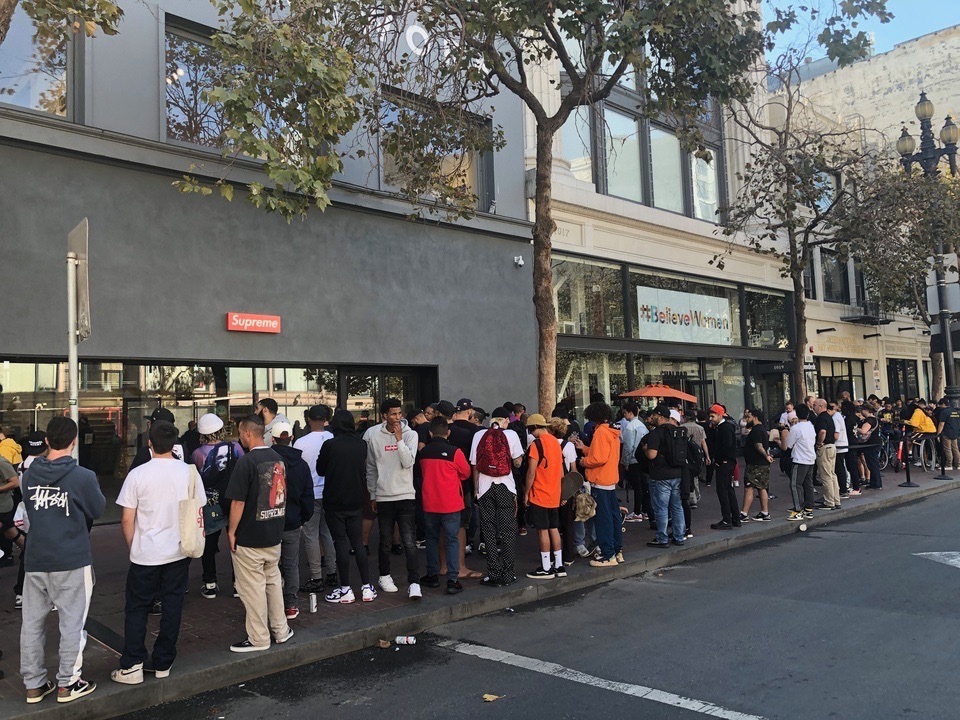
As a streetwear enthusiast, seeing fashion transition from being women-dominated to being men-dominated was intriguing for me to observe. I remember still being at home in Southern California and seeing how the line outside the Supreme store in West Hollywood looked as if it was ninety percent male. On Instagram, the streetwear category became overly saturated with men wearing Yeezys, black skinny jeans, and Bape T-shirts. There are also many male YouTubers uploading videos talking about how they spent hundreds of thousands of dollars on expensive streetwear pieces. So, why aren’t women being more represented or involved in the streetwear industry?
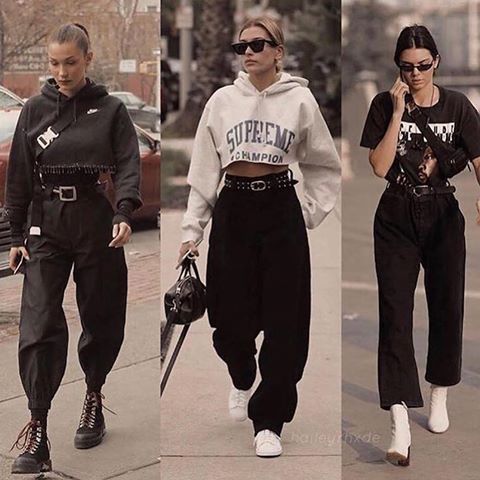
In a Vogue Business article called “Is Streetwear Finally Ready for Women?” writer Annachiara Bondi writes, “Streetwear for women has been difficult to market, with many women buying from menswear and/or menswear retail spaces.” I agree that this trend has hindered female streetwear from reaching the same status as male streetwear brands. Since men’s streetwear is composed of generally gender neutral articles of clothing, women are able to shop directly off male streetwear brands if they wanted to. Due to how esteemed designer brands have become in today’s culture, some women would rather wear a piece from a famous, male-controlled streetwear brand like Supreme or Stussy, than an underground, female-controlled brand. In this instance, I do not think women buy male streetwear pieces because they inherently believe female streetwear is inferior but rather due to brand recognition, comfort, and accessibility. I believe that the mass amounts of gender neutral or conventionally masculine pieces in streetwear inspired potential female streetwear brands to bring something different to the table.
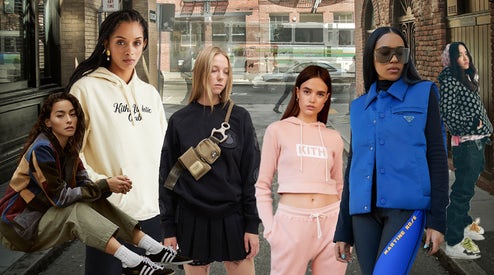
Although women buying from male streetwear brands has given the female streetwear market some difficulties, the growth of female streetwear brands is not entirely stunted. In the same Vogue Business article, Bondi cites, “The amount of new women’s streetwear drops has increased by 38 per cent over the last 12 months.” Very recently, I have seen some significant expansion of the female voice in streetwear. The brand I.AM.GIA has done a successful job building a business of selling very feminine pieces inspired by 90s punk culture, and the brand Pretty Little Thing sells items ranging from hoodies to bodycon dresses catered for women. I think that this increase of sales within women’s streetwear is beneficial for the industry, making it a more inclusive community. It also adds variety within streetwear since it includes feminine pieces, such as dresses and rompers, as opposed to having only T-shirts and hoodies. These unique feats of these brands have allowed them to grow as well as instill change and progress in the world of streetwear.
Furthermore, in an article from Business of Fashion called “Why Women’s Streetwear Will Be Big Business,” writer Reggie Casagrande warns, “If [brands] don’t commit to growing and serving their female audiences, they will be left behind.” I agree that the streetwear market definitely has room for more women to corner, and I believe that big male-oriented streetwear brands like the Hundreds and Palace should try to cater more towards women interested in streetwear. However, I disagree with the notion that catering to female audiences will ensure the brand’s success. For example, Macy’s and Forever 21, which had a majority of women’s clothing, are now being driven out of business. Yes, I do agree that brands must represent women in order to be successful, but it should not be the only thing that they depend on in order to generate profit. Other aspects, such as good quality textiles and creative graphics and designs, are important in sustaining a brand.
 Sam Redondo
I find this topic interesting, as I often incorporate streetwear consistently in my fashion. I too have often noticed that streetwear brands are often oriented towards males, and female streetwear clothing isn’t very common. Streetwear is often unisex, even though it’s men oriented, allowing women to purchase the clothing. I believe streetwear hasn’t taken a large turn towards producing women oriented clothing, as the demand for it isn’t as high. Women who appreciate streetwear clothing appreciate the style that is currently being made. therefore, the unisex design of most streetwear clothing is successful in selling to both genders, as the style and brand name are quite common and unisex. Do you think this stereotype will change in the future? Will women oriented streetwear become more popular and easier to access?
LikeLike
I read through all your posts and find this one is the most impressive and thoughtful one. I can see how you brainstorm and make progress in this topic I agree with you that increasing female recognition and obviousness is a MUST in streetwear industries. I think it’s possible that the brands were locked themselves up in the stereotype that female have skirts and dresses brands, and it’s fine if they want to buy some oversize clothes from us, but we don’t have to produce series of clothes for female. There’s another possibility that brands directors are focusing on the cost of producing addition branch of female clothes, then they could likely to produce neutral-gender cloth with one sizing standard. These are my conjectures toward this phenomenon. Also, I think Virgil was doing really well in this affair, and he maybe the most famous designer who promoted female series in his brand. I was impressed by your critical response to the reference: ‘ I do agree that brands must represent women in order to be successful, but it should not be the only thing that they depend on in order to generate profit’. It’s an obligation for brands to focus on women’s demands.
LikeLike
Now that you said it, it is true that men’s streetwear is being so popular these days that even women are tempted by it. I see that most of the fashion nowadays are I’d say not gender-biased compared to the past generations. I am not that familiar with fancy brands nor anything expensive in fashion and stuff, for I only dress for comfort, but I believe that everyone is free to dress to what they feel like it. But I can see that there is a problem with streetwear fashion and I mostly agree with what this post has said. Perhaps most of the brands should not prioritize only one gender’s attention but make it more available to anyone would be start for stopping gender domination. But of course, most society is influenced by what is famous and all, either the impacts are positive or negative.
LikeLike
I find this article interesting because I never thought about women in the streetwear industry. As a woman, I’d say I wear a few brands but never gave it any thought as to what involvement women have in running brands like Nike and Hurley. I think this might also have a lot to do with the type of fashion itself. When I think fashion I think magical Couture, a unique one of a kind piece, and not many brands printed on clothes. However, I agree that a lot of women are beginning to advocate for gender neutral streetwear. Some mild like wearing a T-shirt and rocking a messy bun. And then there’s people like Billy Eilish who straight up redefine the meaning of streetwear. It’s also probably due to the fact that fashion for men and women is so utterly diverse that it’s impossible to define such large trends for more than a year. A lot of women like wearing no brand thrift clothes, while others hit up Hollister for the classic ripped boyfriend jeans. Fashion is relative to the sex, and in 2020, the idea of fluidity is stronger than it was 40 years ago.
LikeLike
I agree that brands do not need to cater towards women to turn a profit. Brands will benefit from appealing to a wider audience. Incorporating women into their market will expand possible revenue sources (customers), but it would not stop them from turning a profit. In terms of the longevity of the company, appealing to female consumers may increase the company’s lifespan. As with most fashion, change in tastes could bankrupt a company. If the appeal is wider, the company can stay relevant for longer.
To comment on the example of Macy’s and Forever 21, the failing businesses can result from external factors. I think these retail giants are facing hardships due to the switch to online shopping. The growing popularity of online shopping is hard on brick and mortar retail stores. These physical locations have less foot traffic and less revenue but fixed costs like rent. It will be a smart move for these streetwear companies to expand their audience.
LikeLike
I very much enjoyed reading this blog post because I also have a love for streetwear. I have definitely observed women not being represented in high end streetwear brands and always wondered why there was a target audience geared towards male buyers. I also agree on your opinion in that women do not believe that female streetwear is inferior but is more due to comfort and brand prestige. I also don’t believe that female streetwear is considered inferior but is rather completely different than brands like Supreme. With the female streetwear brands that you have mentioned such as Pretty Little Thing and I.AM.GIA, it seems that these brands are geared towards a more girly audience. Knowing so and having shopped from PLT, it is definitely not the same type of streetwear as Supreme and Stussy are. This connects with the comfortability aspect as well as wanting to have a more cohesive and minimal look as streetwear has shown to have rather than form fitting and revealing. I definitely feel as if women can be represented more in advertising brands like Supreme for reasons of diversity since women also want to buy their products but should not need to feel pressured to dress women in form fitting or cropped clothing as how female clothing has always initially been advertised as.
LikeLike